The Person Who Made $69 Million from NFTs Four Years Ago Is Still Making Money

marsbitPubblicato 2025-12-09Pubblicato ultima volta 2025-12-09

Introduzione

Four# 1st-Project This is my first project

Author: Cookie

Beeple, the man who sold one NFT for a staggering $69 million, has long been seen as a symbol of the golden age of NFTs that once was.

Although the glory of NFTs has faded, Beeple and his team have remained active in the NFT circle. At this year's Art Basel, he brought another "golden dog" to the currently quiet NFT market—Regular Animals.

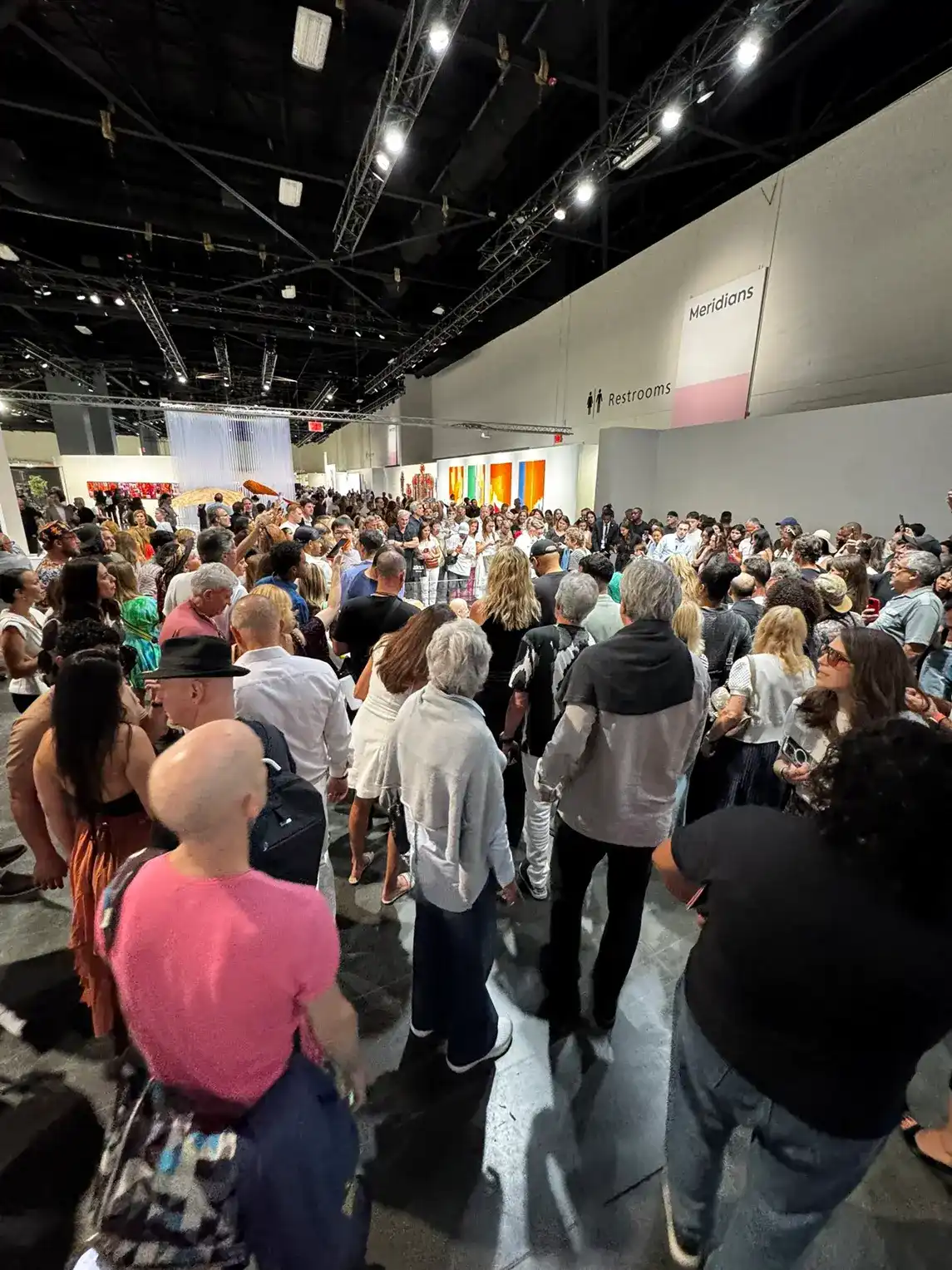
Yesterday, multiple Regular Animals sold for over 10 ETH (approximately $35,000) on OpenSea, and these works were given away for free at Art Basel, with a total of 256 pieces. At this price, Beeple essentially gave away nearly ten million dollars worth of NFTs at Art Basel.

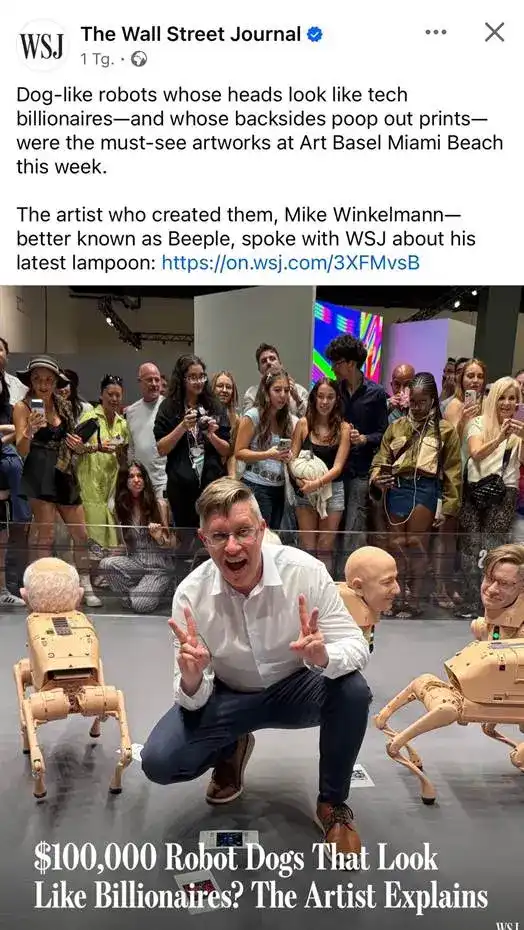
The project that Beeple and his team brought to this Art Basel is precisely Regular Animals. These are a bunch of robot dogs, as shown in the image below. They look a bit eerie because these robot dogs have human faces, and they are faces of well-known figures like Musk, Andy Warhol, Zuckerberg, Picasso, and even Beeple himself.
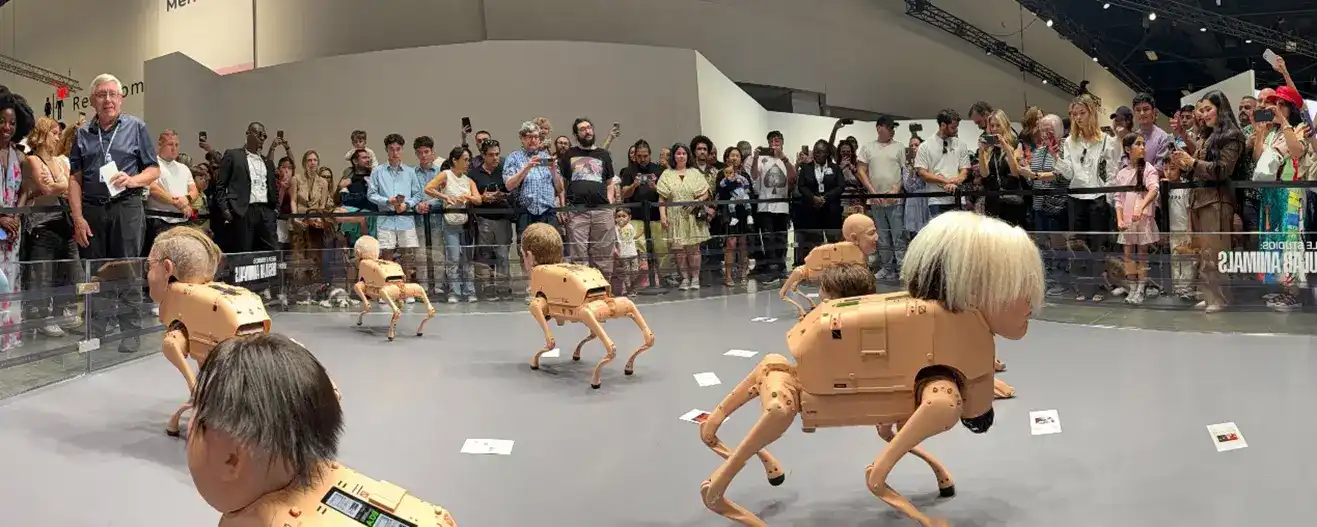
Of course, it's not just the eerie visual effect; these robot dogs use the cameras on their heads to observe their surroundings and employ an evolving visual algorithm to create artworks.
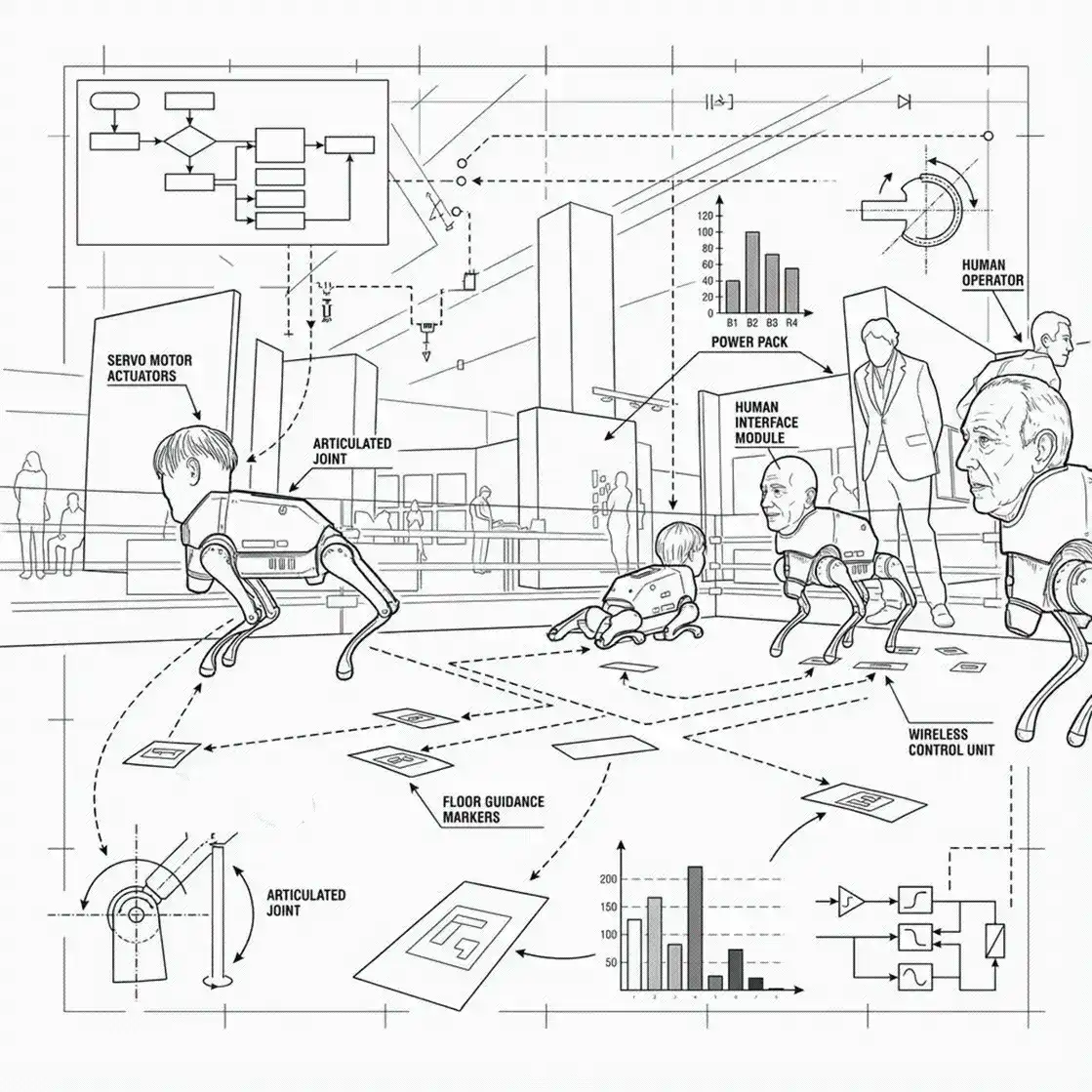
The celebrities these robot dogs portray were not chosen arbitrarily. The reason for selecting the aforementioned figures is that they have influenced how humans view the world, whether through algorithms, art, or politics. As humans, we observe the world through these perspectives, and so do these robot dogs. At Art Basel, these robot dogs and humans observed each other, and the moments of observation became the artworks created by these robot dogs—artworks that also serve as autobiographies for these machines.
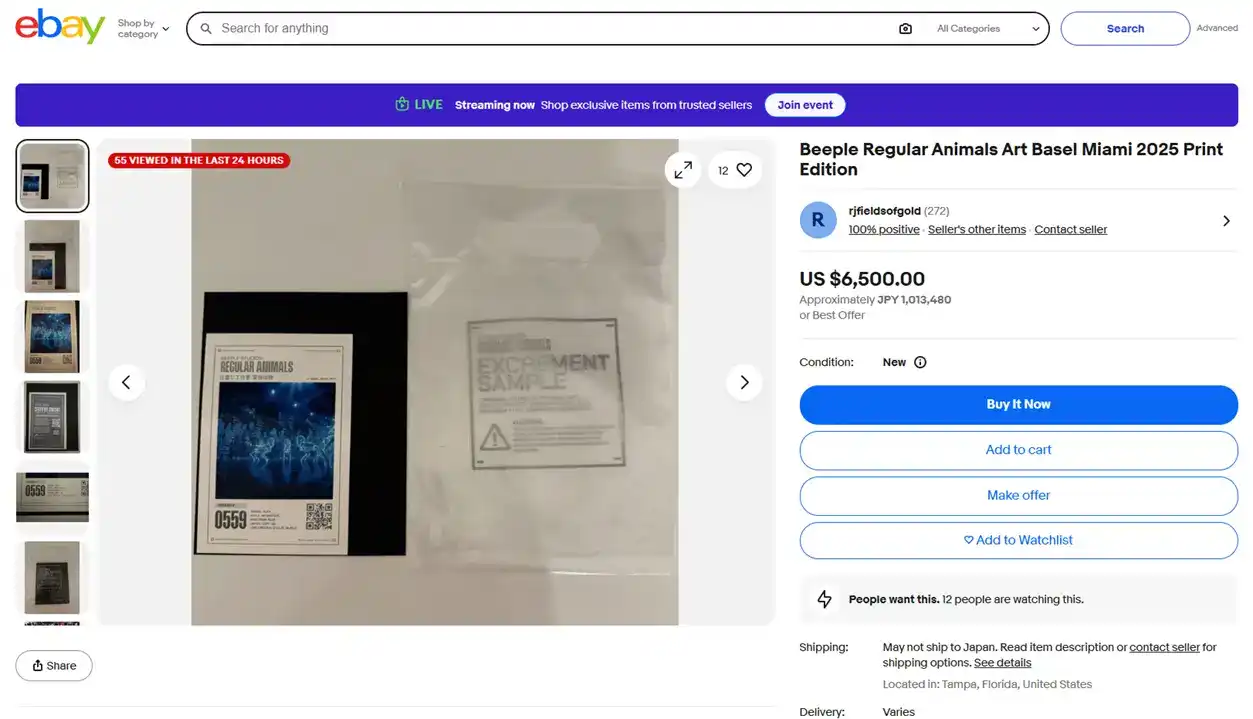
Interestingly, Regular Animals also has a physical series, with a total of 1,024 pieces. On eBay, someone has already listed one for sale at a fixed price of $6,500. The market's valuation suggests that NFTs are far more valuable than physical paintings, reminiscent of Damien Hirst's "The Currency" series years ago, which forced owners to choose between the physical and the NFT.
Before achieving great success in the NFT field, Beeple had been creating art every day since 2007 but had never sold anything for more than $100. After achieving fame and fortune, Beeple did not splurge like some artists or crypto project teams. He acquired a studio/gallery of about 460 square meters, assembled a team of dozens of 3D artists, engineers, and researchers (even including a former Boeing engineer), invited Carolyn Christov-Bakargiev, the former director of the Castello di Rivoli Museum of Contemporary Art, as an advisor, continuously exhibited at art shows around the globe, and created new artworks.

This exhibition of Beeple's robot dogs has not only gained attention in the crypto circle due to its price but has also been covered by traditional media like the WSJ.
Domande pertinenti

QWho is the artist that sold an NFT for $69 million four years ago?

ABeeple.

QWhat is the name of the new NFT project Beeple launched at the Art Basel exhibition?

ARegular Animals.

QHow many Regular Animals NFTs were given away for free at Art Basel, and what was their estimated total value based on secondary market sales?

A256 NFTs were given away, with an estimated total value of nearly $9 million based on sales of over 10 ETH (approx. $35,000) each.

QWhat unique feature do the Regular Animals robot dogs have that allows them to create art?

AThey use cameras in their heads to observe their surroundings and a continuously evolving visual algorithm to create artworks.

QBesides the NFT collection, how many physical pieces are in the Regular Animals series, and what was one listed price for a physical piece on eBay?

AThere are 1024 physical pieces, and one was listed for sale on eBay at a fixed price of $6,500.

Letture associate

They Knew the TGA Game of the Year Winner in Advance and Made Tens of Thousands of Dollars

Summary: The 2025 TGA (The Game Awards) ceremony concluded with the indie game "Light & Shadow: Expedition 33" making history by winning both "Best Independent Game" and the coveted "Game of the Year (GOTY)" award, breaking a long-standing TGA curse. Prior to the event, the prediction market platform Polymarket had already listed the topic, with "Light & Shadow's" probability of winning GOTY consistently above 80% for over a month. Several traders, including users DieselDiesel, trumpnogo, and kasae, placed unusually large, concentrated bets on this outcome weeks in advance, a move that would have resulted in massive losses if wrong. Their bets appeared to be "all-in" convictions rather than calculated risks. Just three hours before the GOTY announcement, after the "Best Indie" award was given to the same game, a mysterious user (bobo9997) deposited $10,000 and bet it all on "Yes" for "Light & Shadow" winning GOTY at a price of $0.98 per share—a bet that would yield less than $200 in profit if correct. The final award confirmed the predictions. The early traders realized significant profits, with their winnings from this single event representing a large percentage of their total historical earnings on the platform (e.g., 176% for DieselDiesel). The article suggests these traders likely had insider knowledge of the results, using the prediction market as a anonymous, low-risk method to monetize their confidential information, turning a guaranteed outcome into thousands of dollars with virtually no risk.

marsbit21 min fa

They Knew the TGA Game of the Year Winner in Advance and Made Tens of Thousands of Dollars

marsbit21 min fa

Weekly Review and Outlook | Circle Issues 500 Million USDC on Solana; Japan Plans to Include Crypto Assets in Securities Regulatory Framework; Gemini Approved by CFTC to Establish Prediction Market; Fed Cuts Benchmark Rate by 25 Basis Points

This week in crypto and financial markets was marked by significant developments and regulatory shifts. Circle issued an additional 500 million USDC on the Solana network, reflecting strong demand for the stablecoin, with trading volume exceeding $11.9 billion within 24 hours. Dubai Customs partnered with Binance to explore crypto payments for trade and logistics, aiming to enhance efficiency and reduce costs. Twenty One Capital, backed by Tether and Bitfinex, began trading on the NYSE, though its stock fell 20% on the first day. Strive launched a $500 million ATM financing plan, partly to acquire more BTC, while American Bitcoin increased its holdings to 4,783 BTC. Japan's FSA proposed bringing crypto assets and IEOs under securities regulations, requiring stricter disclosures and cracking down on insider trading. Jupiter announced its own stablecoin, JUP USD, and acquired RainFi to offer peer-to-peer lending services. Gemini received CFTC approval to launch a blockchain-based prediction market, potentially expanding into crypto derivatives. The Federal Reserve cut interest rates by 25 basis points to 3.50%-3.75%, responding to slowing economic growth. Looking ahead, HashKey Group plans to raise up to HK$1.67 billion in its Hong Kong IPO on December 17. Several tokens, including Starknet, Arbitrum, and LayerZero, are scheduled for unlocks next week, which may influence market liquidity.

cointelegraph_中文36 min fa

Weekly Review and Outlook | Circle Issues 500 Million USDC on Solana; Japan Plans to Include Crypto Assets in Securities Regulatory Framework; Gemini Approved by CFTC to Establish Prediction Market; Fed Cuts Benchmark Rate by 25 Basis Points

cointelegraph_中文36 min fa

Trading

Spot
Futures
活动图片